Branding 101: How Small Businesses Build a Premium Brand That Attracts Better Clients

Your brand is not your logo
A lot of small business owners think branding means picking colors and a logo.
That is part of it, but it is not the whole story.
Your brand is how people perceive your business before, during, and after they interact with it.
A strong brand makes your business feel trustworthy, memorable, and worth paying more for.
What is branding, really?
Branding is the combination of your visual identity, your voice, your positioning, and the experience you consistently deliver.
It answers one core question for your audience: why should I choose you over someone else?
1. Start with positioning, not visuals
Before choosing colors or fonts, get clear on who you serve, what makes you different, and what you want to be known for.
Positioning shapes every visual and messaging decision that follows. Skipping this step is why many rebrands still feel generic.
2. Build a visual identity that feels intentional
Your visual identity includes your logo, color palette, typography, and imagery style.
These elements should work together to create a consistent feeling, whether that is premium, approachable, bold, or minimal.
A primary and secondary color palette, not just one accent color
One or two typefaces used consistently across every platform
A clear logo that works in color, black, and white
3. Define your brand voice
How you sound matters as much as how you look.
A brand voice is the tone and language you use consistently across your website, social media, and client communication.
A wellness brand might sound calm and reassuring. A bold creative studio might sound direct and confident. Your voice should match your positioning.
4. Make your brand consistent everywhere
Inconsistency is one of the fastest ways to weaken trust.
If your website, Instagram, proposals, and email signature all feel like different businesses, potential clients notice, even if they cannot say exactly why something feels off.
Consistency builds recognition. Recognition builds trust.
5. Let your brand attract the right clients
A strong brand does not just look good. It filters who reaches out to you.
A premium, clearly positioned brand attracts clients who value quality and are less focused on being your cheapest option.
A generic, inconsistent brand attracts price-driven inquiries and more back-and-forth before a sale.
When is it time to invest in branding?
You may need branding support if your business has outgrown its current look, your marketing feels inconsistent, or you are attracting the wrong type of client.
It may also be time if you are launching a new offer or repositioning your business for a different audience.
The takeaway
Branding is not decoration. It is strategy expressed visually.
A clear, consistent brand makes every other part of your marketing work harder, including your website, ads, and content.
Curious what your website says about your brand right now? Download our free Website Growth Checklist to find out.
————
FAQs
What is the difference between branding and a logo?
A logo is one visual element of a brand. Branding includes your positioning, voice, visual identity, and the overall experience clients have with your business.
Why does branding matter for small businesses?
Strong branding builds trust, creates recognition, and attracts the right clients. It also allows small businesses to charge premium prices instead of competing only on cost.
How do I know if my brand needs an update?
Signs include inconsistent visuals across platforms, messaging that no longer reflects your business, or attracting clients who do not match your ideal audience.
Does branding really affect who becomes a client?
Yes. A clear, premium brand tends to attract clients who value quality, while a generic or inconsistent brand often attracts price-focused inquiries.
Does ANG Productions offer branding services?
Yes. ANG Productions helps businesses build strategic visual identities and brand systems that support stronger websites, marketing, and client trust.
Related Articles
Read more from our blog

What a Website Strategist Actually Does for Your Business
Wix vs. Squarespace vs. Framer vs. Shopify: Which Platform Is Right for Your Small Business in 2026?
How Much Does a Small Business Website Cost in 2026? (An Honest Breakdown)

How to Plan a Website That Grows With Your Business
What Your Website Should Actually Be Doing for You

Stop Treating Your Website Like a Project
Why Your Small Business Website Isn’t Converting (And What to Fix First)

The 5 Essentials Every Small Business Website Needs in 2026
This Year, Let Your Website Do More of the Work

10 UX/UI Mistakes That Are Quietly Killing Your Website's Conversions

How to Build a Marketing Funnel That Turns Website Visitors Into Paying Clients
Branding 101: How Small Businesses Build a Premium Brand That Attracts Better Clients

How to Run Ad Campaigns That Actually Generate Leads (Not Just Clicks)
A creative studio specializing in web design, branding, and digital strategy. We help businesses build their online presence with impactful design and seamless execution.
" height="13.449209421163687px" id="RZy9ceYgH" width="13.415220533212192px"/></g></svg>)
" height="100px" id="ZGdWvzvid" transform="translate(0.11 0)" width="99.74727939993px"/></svg>)

" height="100px" id="hi4VD4pbv" transform="translate(0.11 0)" width="99.74230642343855px"/></svg>)
© 2026 ANG Productions. All Rights Reserved.
A creative studio specializing in web design, branding, and digital strategy. We help businesses build their online presence with impactful design and seamless execution.
ANG PRODUCTIONS
© 2026 ANG Productions. All Rights Reserved.
Branding 101: How Small Businesses Build a Premium Brand That Attracts Better Clients
Your brand is not your logo
A lot of small business owners think branding means picking colors and a logo.
That is part of it, but it is not the whole story.
Your brand is how people perceive your business before, during, and after they interact with it.
A strong brand makes your business feel trustworthy, memorable, and worth paying more for.
What is branding, really?
Branding is the combination of your visual identity, your voice, your positioning, and the experience you consistently deliver.
It answers one core question for your audience: why should I choose you over someone else?
1. Start with positioning, not visuals
Before choosing colors or fonts, get clear on who you serve, what makes you different, and what you want to be known for.
Positioning shapes every visual and messaging decision that follows. Skipping this step is why many rebrands still feel generic.
2. Build a visual identity that feels intentional
Your visual identity includes your logo, color palette, typography, and imagery style.
These elements should work together to create a consistent feeling, whether that is premium, approachable, bold, or minimal.
A primary and secondary color palette, not just one accent color
One or two typefaces used consistently across every platform
A clear logo that works in color, black, and white
3. Define your brand voice
How you sound matters as much as how you look.
A brand voice is the tone and language you use consistently across your website, social media, and client communication.
A wellness brand might sound calm and reassuring. A bold creative studio might sound direct and confident. Your voice should match your positioning.
4. Make your brand consistent everywhere
Inconsistency is one of the fastest ways to weaken trust.
If your website, Instagram, proposals, and email signature all feel like different businesses, potential clients notice, even if they cannot say exactly why something feels off.
Consistency builds recognition. Recognition builds trust.
5. Let your brand attract the right clients
A strong brand does not just look good. It filters who reaches out to you.
A premium, clearly positioned brand attracts clients who value quality and are less focused on being your cheapest option.
A generic, inconsistent brand attracts price-driven inquiries and more back-and-forth before a sale.
When is it time to invest in branding?
You may need branding support if your business has outgrown its current look, your marketing feels inconsistent, or you are attracting the wrong type of client.
It may also be time if you are launching a new offer or repositioning your business for a different audience.
The takeaway
Branding is not decoration. It is strategy expressed visually.
A clear, consistent brand makes every other part of your marketing work harder, including your website, ads, and content.
Curious what your website says about your brand right now? Download our free Website Growth Checklist to find out.
————
FAQs
What is the difference between branding and a logo?
A logo is one visual element of a brand. Branding includes your positioning, voice, visual identity, and the overall experience clients have with your business.
Why does branding matter for small businesses?
Strong branding builds trust, creates recognition, and attracts the right clients. It also allows small businesses to charge premium prices instead of competing only on cost.
How do I know if my brand needs an update?
Signs include inconsistent visuals across platforms, messaging that no longer reflects your business, or attracting clients who do not match your ideal audience.
Does branding really affect who becomes a client?
Yes. A clear, premium brand tends to attract clients who value quality, while a generic or inconsistent brand often attracts price-focused inquiries.
Does ANG Productions offer branding services?
Yes. ANG Productions helps businesses build strategic visual identities and brand systems that support stronger websites, marketing, and client trust.
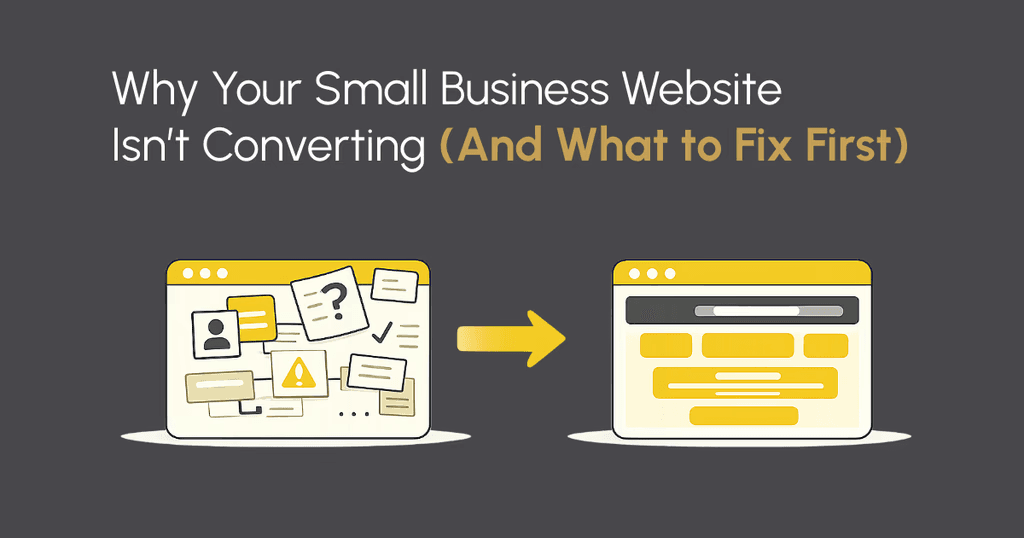
Why Your Small Business Website Isn’t Converting (And What to Fix First)
Why Your Small Business Website Isn’t Converting (And What to Fix First)
Why Your Small Business Website Isn’t Converting (And What to Fix First)
Why Your Small Business Website Isn’t Converting (And What to Fix First)
Related Articles
Read more from our blog
A creative studio specializing in web design, branding, and digital strategy. We help businesses build their online presence with impactful design and seamless execution.
ANG PRODUCTIONS
Services
© 2026 ANG Productions. All Rights Reserved.